
Tahini: From Hummus to Halva — Complete Guide to Turkish Sesame Paste
What is tahini, how it's made, all the ways to use it in Turkish and Middle Eastern cuisine — from savory (hummus, sauces) to sweet (halva, jam).
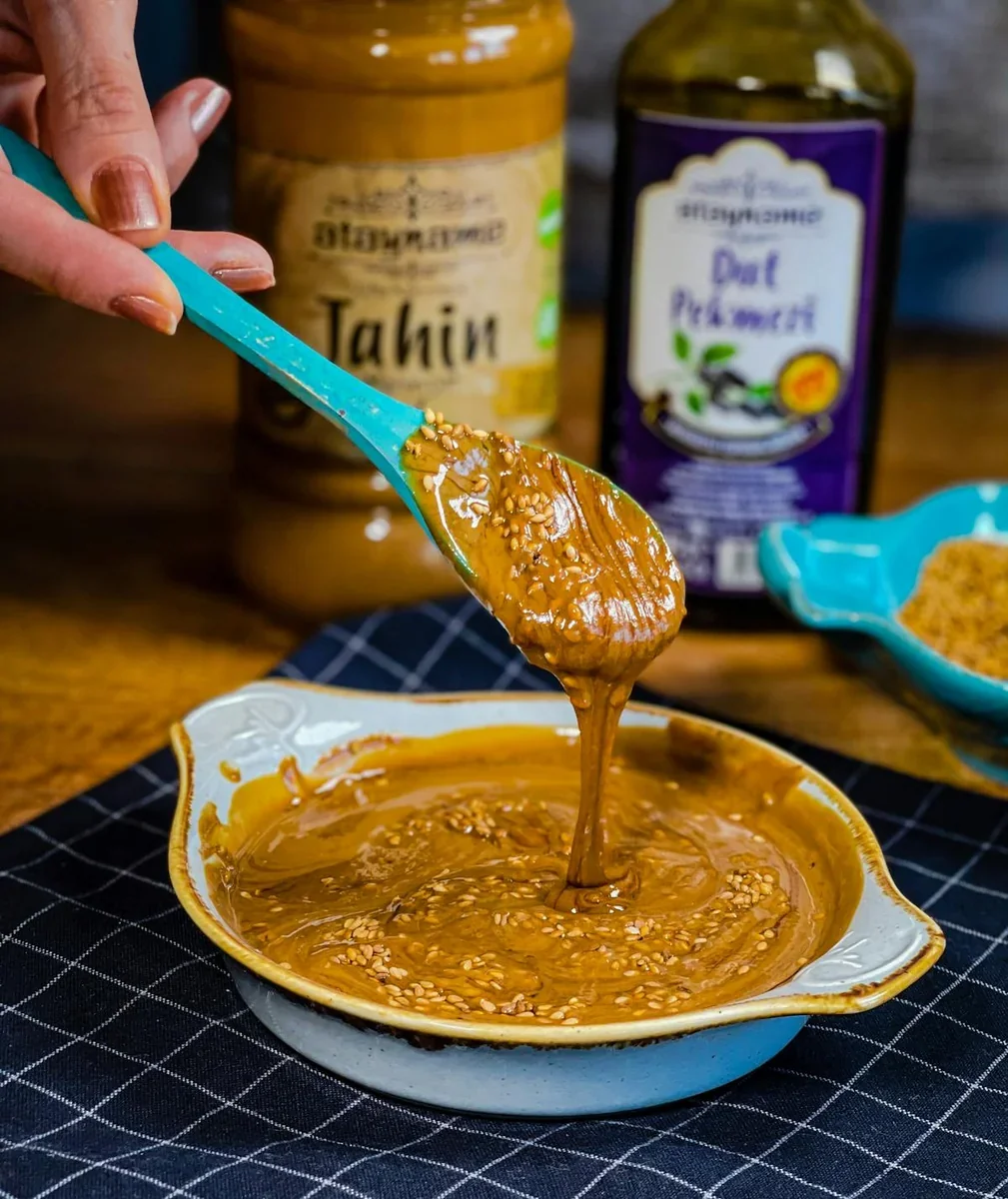
Open any Turkish cookbook and you'll find tahini in almost every section. From savory (sauces, dips) to sweet (halva, baklava). What makes it so universal? Let's unpack this ancient Middle Eastern ingredient.
What is Tahini?
Tahini (Turkish tahin, Arabic طحينة) is sesame paste. It's made by grinding roasted sesame seeds into a smooth, creamy consistency. Color: creamy white to light-golden. Texture: thick, but separates into oil and paste — always stir before use.
How is Turkish Tahini Different from Others?
- Turkish: made from roasted sesame from the Antalya, Adana regions. Slightly sweet, smooth texture.
- Levantine (Syrian, Lebanese): more intense flavor, slightly bitter from long roasting.
- Ethiopian/Habesha: notes of vanilla, very mild.
Eksendoo offers premium Seyidoğlu tahini with pekmez, the classic Turkish breakfast set.
Classic Uses — Savory
1. Hummus
Classic recipe:
- 400g cooked chickpeas (or canned)
- 3 tbsp tahini
- 2 tbsp olive oil
- Juice of half a lemon
- 1 garlic clove
- 1 tsp cumin
- Salt
Blend everything until smooth paste. Serve with olive oil and pul biber.
2. Tahini Salad Dressing
3 tbsp tahini + 2 tbsp lemon juice + 1 tbsp water + salt + pepper. Stir until smooth. Ideal for greens, cucumber, tomato.
3. Tahini for Grilling
Mix tahini, yogurt, garlic, pepper. Serve with kebab or roasted chicken.
Classic Uses — Sweet
4. Tahini with Pekmez (Classic Turkish Breakfast)
Put a spoon of tahini + a spoon of grape molasses on a plate. Mix. Eat with bread, simit, or pide. Rich and protein-packed, ideal morning meal. Our Seyidoğlu set contains both in one package.
5. Halva (Tahini Halva)
Traditional Turkish confection from tahini, sugar, and nuts. Made at high temperatures. Our Seyidoğlu halva available in plain and cocoa varieties, in convenient portion packs.
6. In Baklava
Traditionally a tahini layer is added between yufka pastry sheets. Adds richness and balances syrup sweetness.
Tahini-Pekmez — Recipe If You Want to Make It Yourself
If you want to make your own version:
- Cook 500ml fresh grape juice until reduced to 1/3 (about 1 hour on low heat)
- Cool — that's the pekmez
- Serve alongside tahini, 1:1 or 1:2 ratio as desired
Health Benefits
- High protein content (about 17g per 100g)
- Rich in calcium, phosphorus, iron, magnesium
- Healthy unsaturated fats
- Gluten-free, lactose-free
- Ideal for vegans (dairy alternative)
One tablespoon (15g) has about 90 kcal and 2.7g protein. Ideal as a healthy fat source in daily diet.
Storage
Unopened: 12 months in dry, cool place. Opened: 4-6 weeks at room temperature, up to 3 months in fridge. Always stir oil back into paste before use.
Tahini is Turkish cuisine's quiet giant — not the star, but without it many classics would vanish.
Frequently Asked Questions
Can I use peanut butter instead of tahini?
Not for authentic flavor. Peanut has a completely different taste and aroma. For hummus, tahini is irreplaceable.
What if the tahini is bitter?
Probably over-roasted or old. Real Turkish tahini is mild and slightly sweet. Try a premium brand (Seyidoğlu) for best results.
Discover authentic Turkish foods in our store.
Browse productsMore posts
Gibanica and Turkish börek: cousins across the Bosphorus
Gibanica, Sarajevo burek, Turkish su böreği and sigara böreği all come from the same Otto…
Ajvar season is coming: Turkish allies for the best zimnica
Late August in Serbia means ajvar season: roasted peppers perfume whole neighborhoods and…
Kajmak vs Turkish kaymak: one word, two worlds
Kajmak is one of the few words a Serb and a Turk pronounce identically — while meaning tw…